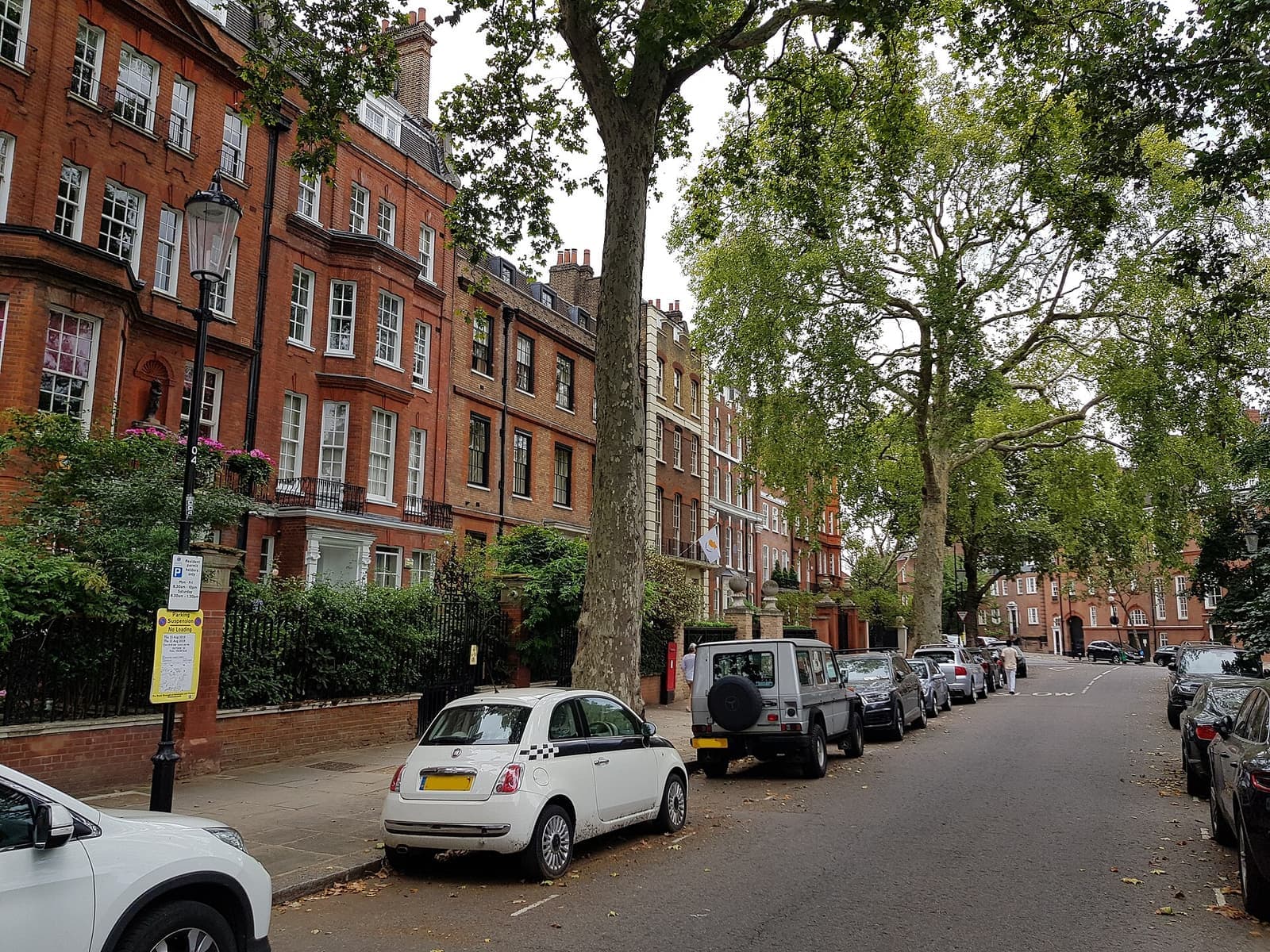
Chelsea has a way of feeling both village-like and unapologetically London. It stretches along the Thames from Chelsea Bridge to Lots Road, anchored by the King's Road and flanked by white-stucco terraces, mews lanes, and garden squares. Think weekend flower stalls on Duke of York Square, a lazy stroll through the Physic Garden, and gallery hopping tucked between antique shops.
Quick facts and feel
- Character: Georgian and Victorian terraces, pastel mews, discreet mansion blocks; a long-standing arts and design scene born on the King's Road.
- Green space: The Chelsea Embankment, the Chelsea Physic Garden (London's oldest botanic garden), and Battersea Park just across Albert Bridge.
- Culture: Saatchi Gallery at Duke of York, the annual Chelsea Flower Show at the Royal Hospital, and a warren of independent boutiques and cafés.
- Everyday errands: Partridges for groceries, Pavilion Road's butcher–baker–cheesemonger row, and the Saturday food market beside the Saatchi.
Education and schools around Chelsea
Chelsea sits near a dense cluster of well-regarded primaries and secondaries:
- Primaries (state): Christ Church CofE (SW3), Holy Trinity CofE (Sloane Square), Servite RC (Fulham Road), and Oratory RC Primary (near Brompton Road).
- Secondary (state): Chelsea Academy (Lots Road; Church of England academy) and the specialist Kensington & Chelsea College for further education on Hortensia Road.
- Independent: Francis Holland (Sloane Square), Garden House (Cadogan Gardens, prep), Hill House (Hans Place, mixed prep), and the bilingual École Jeannine Manuel London (Bedford Square campus with Chelsea families in catchment).
Admissions change annually, so families should check current catchments and Ofsted/ISI reports before applying; the Royal Borough of Kensington and Chelsea (RBKC) publishes up-to-date guides each spring.
Transport and stations
- Underground: Sloane Square (District/Circle) is the heart of Chelsea's tube access. South Kensington (Piccadilly, District, Circle) is a short walk east for Heathrow-bound Piccadilly trains.
- Overground/rail: Imperial Wharf (London Overground and Southern) covers the western edge, linking to Clapham Junction, Shepherd's Bush, and Stratford.
- Buses: Frequent routes along King's Road and Fulham Road (e.g., 11, 19, 22, 137, 211, 319) connect to Victoria, the West End, and Battersea Power Station.
- Cycling: The Thames Path, quiet mews streets, and Cycleway C3/C4-style links toward Westminster and Battersea; Santander Cycles are dotted along the embankment and King's Road.
- River bus: Battersea Power Station pier across the river is the nearest Thames Clippers stop, handy for Canary Wharf and the City.
Council tax snapshot (RBKC)
Council tax is set by RBKC plus the Greater London Authority (GLA) precept. For 2026/27, Band D is £1,643.44: RBKC £1,132.93 plus the GLA precept £510.51. That is a 4.99% rise on the borough element (including a 2% adult social care precept) and 4.1% on the GLA share. Band B is £1,278.23; Band H is double Band D. Garden-square levies add a little more on some streets. Single-occupier discounts and exemptions still apply; check your exact band on the RBKC Council Tax pages.
Sales data and market pulse
Land Registry figures through late 2024 kept Chelsea firmly in prime central London territory (treat these as a baseline; 2025–26 sales have been slower, as they have across prime London):
- Average sold price (all property types): ~£1.7m, with a wide range by street and building condition.
- Flats/maisonettes: Commonest transaction type, averaging ~£1.3m; lateral apartments in portered blocks can exceed £2m.
- Terraced houses: Often £3m–£4m+, with garden-square addresses and fully refurbished homes selling higher.
- Transaction volume: Slightly lower year-on-year (single-digit % dip), reflecting higher mortgage rates and longer selling timelines.
For a live view, pair Land Registry data with local agent reports (Savills, Knight Frank, John D Wood) and the RBKC planning portal to see nearby refurbishments or basement projects that might affect future values.
Daily living tips
- Groceries and food: Partridges, M&S Food (King's Road), Waitrose (Belgravia a short walk), plus Natoora and Bayley & Sage for specialty produce.
- Eating out: Colbert on Sloane Square for brasserie staples, The Ivy Chelsea Garden for a conservatory lunch, Black Penny or Hagen for coffee, and Medlar on King's Road for a polished dinner.
- Parks and play: Battersea Park's zoo and boating lake across Albert Bridge; Chelsea Physic Garden for quiet afternoons; St Luke's Gardens as a small local green.
- Culture days: Saatchi Gallery exhibitions, Royal Court Theatre (one stop away at Sloane Square), and gallery clusters along Pimlico Road.
- Staying mobile: Chelsea's narrow streets reward walking; plan extra time for school-run traffic near Sloane Square and Fulham Road.
Bottom line
Chelsea pairs riverside calm with West End immediacy: schools within walking distance, tube and Overground links in reach, and a housing market that commands prime prices but holds long-term appeal. If you like leafy squares, strong transport back-up options, and a neighbourhood that still feels like a village after dark, Chelsea remains one of London's most livable enclaves.